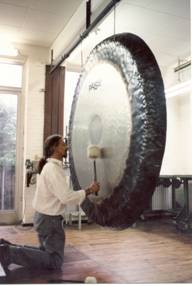
Experts state that the word Gong comes
from Malaysia. However, all cultures capable of producing bronze had some type of
Gons. Gongs have been created in Southeast
Asia, India, Tibet, China, Korea, Japan. Indonesian gongs, in particular, produce a specific tone. The
reverberation is moderate. Another type of
Gong, the Chinese chan luoi is especially
popular in orchestras and music therapy.
The Magic of Gong Nowadays
The
Gong was introduced to West during the period of colonization and became a
part of the traditional orchestra. Today, Gongs are used for a variety of
purposes other than music. They are most often connected with spiritual purposes.
Gongs are used in temples as an accompaniment to weddings and other religious
rituals. With the advent of pop music and the growing demand for experimental
unusual sounds, a new application for the Gong in contemporary music emerged.
Gongs are made of bronze. The primary alloys in the creation of a
Gong are made of copper and tin, but small amounts of lead, silver and gold are often added to alter the characteristics of the sound. The production of
a Gong includes the process of forging, hammering, and tuning. Musicians use a variety of tools that generate different types of sounds. These include Gong Mallets of Lambskin, Solid Woolen Mallets, Soften Silicon Mallets.
Every sound has a complex effect on the
nervous system. The vibrations stimulate the sensory neurons connected with the organs. What follows is an effect that occurs in an immaterial way. Sound
is transformed directly from physical body energy to the dream body through the vibrating nodes
or chakras, the force of life energy.

 Origin of
the Gong
Origin of
the Gong